Feronia Font: A Practical Guide to Its Strengths and Best Uses
Understanding Feronia's Place in the Handwritten Font Landscape
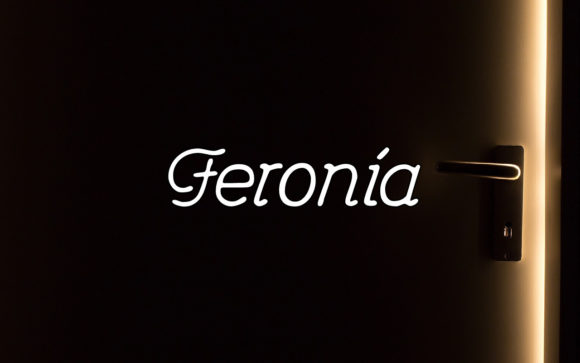
Feronia is a handwritten typeface designed by Peter Wiegel. At its core, it's a clean, legible script that avoids the messy, overly casual look common in many similar fonts. Its characters are well-balanced, offering a consistent rhythm that makes it surprisingly versatile. When you first encounter Feronia, you'll notice it doesn't scream for attention. Instead, it presents a quiet confidence, making it a useful tool for designers seeking a personal touch without sacrificing readability.
The font's distinctiveness lies in its simplicity. Many handwritten fonts lean heavily into stylistic quirks—exaggerated loops, inconsistent letterforms, or a deliberately rough texture. Feronia takes a different approach. Its strokes are smooth and deliberate, creating a neat appearance that feels both authentic and controlled. This balance is what allows it to match a wide pool of designs. It can feel at home on a wedding invitation, a casual branding project, or a social media graphic, adapting its tone to the context.
Key Characteristics That Define Feronia
When evaluating a font like Feronia, it's helpful to break down its visual attributes. The x-height is moderate, which contributes to its excellent legibility even at smaller sizes. The letter spacing is even, preventing the text from feeling cramped or overly airy. The terminals and connections are crafted to flow naturally, mimicking the organic movement of handwriting while avoiding the pitfalls of poor digital rendering. These technical details are what separate a well-designed handwritten font from a simple novelty.
Another practical aspect is its character set. Feronia includes a full range of uppercase and lowercase letters, numerals, and standard punctuation. For many projects, this is sufficient. However, designers working on multilingual projects or requiring advanced typographic features should verify if the font includes the necessary glyphs. This is a common consideration when choosing any typeface, and it's where comparing options becomes essential.
Comparing Feronia to Other Handwritten Styles
The handwritten font category is vast. On one end, you have highly expressive, almost illegible scripts meant for logos or artistic pieces. On the other, you find "print handwriting" fonts that mimic a student's notebook. Feronia sits comfortably in the middle, often described as a "neat and simple" option. This makes it a strong candidate when the goal is to add a human element without compromising the message's clarity.
Compared to a more formal calligraphic script, Feronia is less ornate and easier to read in longer passages. Compared to a whimsical, childlike scrawl, it feels more mature and professional. This middle-ground positioning is its greatest strength for certain projects. For instance, a bakery's menu might use Feronia for its warmth, whereas a legal document would require a completely different, more traditional serif or sans-serif font.
It's also worth considering the design philosophy behind the font. Some handwritten fonts are designed to look as if they were written quickly, with visible ink blots or pressure variations. Feronia's design is more stable and consistent. This can be a tradeoff. If you're looking for raw, spontaneous energy, a different font might be better. If you need reliability and a polished feel, Feronia is a strong contender.
When is Feronia the Right Choice?
Feronia shines in projects where readability and a friendly tone are paramount. Think of blog headers, quote graphics, subheading accents, or personal branding for freelancers and consultants. Its neat appearance ensures that the text remains the focus, not the font's own style. It's also a practical choice for digital applications like website buttons or app interfaces where a touch of personality is desired but performance cannot be sacrificed.
Consider these practical scenarios:
- Wedding Invitations or Event Stationery: Feronia provides the elegant, personal feel expected in such designs while ensuring all details are easily read by guests of all ages.
- Product Packaging for Artisan Goods: For labels on handmade candles, jams, or crafts, it communicates care and authenticity without looking cheap or cluttered.
- Educational Materials or Children's Books: Its clarity makes it suitable for headings or dialogue, where a handwritten style adds engagement but confusion is not an option.
In these cases, Feronia acts as a supporting player. It enhances the design without overpowering the content or the primary typeface used for body text.
Limitations and When to Look Elsewhere
No font is perfect for every job. Feronia's strengths become its limitations in certain contexts. Its neatness can feel too controlled for projects that require a gritty, street-art aesthetic or a very vintage, weathered look. Similarly, for ultra-formal applications like corporate reports, academic papers, or legal contracts, even a clean handwritten font is generally inappropriate. In these situations, a classic serif or a modern sans-serif would be the more credible and effective choice.
Another consideration is overuse. Because Feronia is versatile, it can become ubiquitous in certain design niches, like indie branding or Instagram graphics. If your goal is to stand out with a truly unique typographic voice, you may need to search for a less common alternative or customize the font through lettering.
Furthermore, long blocks of text set entirely in Feronia can still cause eye strain. Handwritten fonts, by nature, are best used sparingly—for titles, pull quotes, or short phrases. For body copy, pairing it with a highly legible serif or sans-serif is a standard and wise practice. This pairing creates visual hierarchy and maintains readability.
Making an Informed Decision: Practical Evaluation Steps
Before committing to Feronia for a project, take a few practical steps. First, test it in context. Don't just look at the font specimen sheet; mock it up in your actual design. Does it work with your color palette? Does it harmonize with other fonts you're using? Second, check the technical details. Is it available in the file format you need (e.g., OTF, TTF, WOFF for web)? Does the license cover your intended use—personal, commercial, or embedding in a digital product?
Third, consider the emotional tone. Show the design to someone unfamiliar with the project. What words do they use to describe it? If they say "friendly," "approachable," and "clear," you're on the right track. If they say "messy" or "childish," it might not be the best fit.
Finally, explore alternatives with a clear criteria list. What specific need does Feronia fulfill? Are there other fonts that meet that need with a slightly different personality? Sometimes, the right choice comes down to subtle differences in curve weight or letter connection. Researching and comparing a handful of options—without necessarily naming competitors—helps solidify why one font might be preferable for your specific goals.
In conclusion, Feronia by Peter Wiegel is a thoughtfully designed tool. Its value lies in its balanced, adaptable nature. It won't be the answer for every design challenge, but for those seeking a neat, legible, and warmly human touch, it is a worthy option to have in your typographic toolkit. The key is to use it intentionally, understanding both its capabilities and its boundaries.