Bintari: A Practical Guide to Integrating Playful Handwritten Fonts into Your Design Workflow
In the world of digital design and crafting, typography is not merely about selecting letters; it is about selecting a voice. For professionals and hobbyists working in Photoshop, Silhouette Design Studio, or similar platforms, the font selection process is a critical step in project planning. Bintari, a modern and playful handwritten script font created by Kong Font Studio, offers a specific stylistic solution for projects requiring a human touch with a contemporary flair. Understanding how to integrate a script font like this into your workflow requires more than just installation; it requires an understanding of compatibility, usability, and quality control.
Understanding the Asset: What is Bintari?
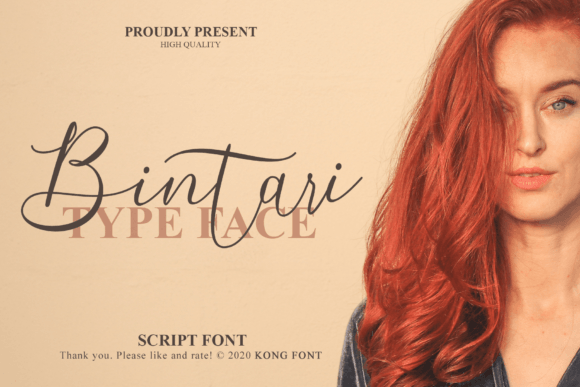
Bintari falls into the category of modern handwritten scripts. Unlike traditional calligraphy fonts that often mimic Victorian or formal cursive styles, Bintari offers a "playful" aesthetic. This suggests a rhythm that is less rigid, likely featuring varying baseline heights and natural connecting strokes. For a designer, this distinction is vital. A playful font implies approachability, warmth, and creativity, making it distinct from fonts intended for corporate reports or technical documentation.
When you introduce Bintari into your library, you are adding an asset designed to convey emotion. It is best suited for headers, logos, wedding invitations, greeting cards, and apparel designs where the text needs to feel personal. Recognizing the font's personality early in the planning stage prevents the common workflow error of forcing a playful script into a context that demands rigid structure.
Preparation and Compatibility Checks
Before incorporating Bintari into a production environment, a necessary step is verifying compatibility. The font is noted for its functionality with tools such as Photoshop and Silhouette Design Studio. This covers two major user bases: digital graphic designers and physical crafters (such as those using vinyl cutters).
Workflow Integration for Digital Designers
For users working in Adobe Photoshop or Illustrator, the preparation phase involves installing the font and ensuring it renders correctly across different operating systems. Because Bintari is a script font, you must pay attention to kerning—the spacing between characters. Handwritten fonts often require manual kerning adjustments to ensure the connection between letters looks natural rather than digital. In your workflow, this means allocating time after typing your text to adjust the tracking and leading, ensuring the "playful" nature of the font does not become disjointed or difficult to read.
Workflow Integration for Crafters
For users of Silhouette Design Studio or Cricut software, the process involves different considerations. When using Bintari for cutting machines, the spacing of the letters is the primary concern. If the letters are too close, the machine may cut the material in a way that causes the design to fall apart. The implementation tip here is to use the "Weld" or "Group" functions in your design software. After typing your phrase in Bintari, you should overlap the connecting tails of the letters slightly and weld them together. This creates a single continuous cut line, preserving the integrity of the handwritten flow in the final physical product.
Strategic Application: Where Bintari Fits in the Process
Effective design is about contrast and hierarchy. When planning a layout, Bintari should rarely be the workhorse font for long paragraphs. Its strength lies in its ability to draw the eye and establish a mood instantly. Therefore, it fits best in the "Hero" section of a design—the main headline or the central focal point of a craft project.
Before the Project: Conceptualization
During the brainstorming phase, consider the message you are trying to convey. If the goal is to create a product that feels organic, artisanal, or fun, Bintari is a strong candidate. For example, a small business owner creating packaging for homemade soaps might choose Bintari for the product name to suggest handmade quality, while using a clean sans-serif for the ingredients list for legibility.
During the Project: Execution and Pairing
One of the most practical aspects of using Bintari is font pairing. Because it is a modern script, it pairs well with geometric sans-serifs (like Montserrat or Roboto) or clean serif fonts. In your workflow, use Bintari for the primary display text and the secondary font for supporting information. This interaction ensures that the design remains readable while retaining the playful personality of the script. Avoid pairing it with other decorative or grunge fonts, as this will create visual noise and reduce the quality of the final output.
After the Project: Quality Control
Once the design is complete, a quality control check is essential. For digital assets, zoom in to check the resolution of the font edges. For physical products, check the weeding process (removing excess material). Bintari’s specific line weight—often typical of modern scripts—will dictate how small you can scale the text before it becomes illegible or difficult to cut. Establishing a minimum size limit for this font in your style guide ensures consistency across future projects.
Organizing and Managing Font Assets
For productivity-minded users, managing assets like Bintari is part of a larger organizational strategy. If you are a freelancer or agency, you likely have hundreds of fonts. Creating a "Playful/Script" folder in your font manager allows you to locate Bintari quickly when a client requests a "fun" or "modern" aesthetic.
Furthermore, because Bintari is available through platforms like Creative Fabrica, it is often part of a broader licensing agreement. Keeping track of where you acquired the font and the specific terms of the license (e.g., commercial use for POD - Print on Demand) is a crucial administrative step. This prevents legal issues down the line and ensures your workflow is professional and compliant.
Long-Term Use and Consistency
Over time, a font can become a recognizable part of a brand's identity. If you are a blogger or a content creator, using Bintari consistently for your Instagram graphics or YouTube thumbnails can help build brand recognition. The "playful" nature of the font becomes synonymous with your content's tone.
However, long-term use requires vigilance regarding trends. Handwritten fonts are popular, but they can also date a design if overused. To mitigate this, use Bintari sparingly. It should be a highlight, not the background noise. By treating the font as a distinct element of your design system rather than a default choice, you extend its lifespan and maintain the freshness of your projects.
Ultimately, Bintari is a tool for connection. It bridges the gap between digital precision and human warmth. By integrating it thoughtfully—checking compatibility, pairing it wisely, and organizing it effectively—you can leverage this asset to enhance the quality and emotional resonance of your work, whether you are designing a wedding invitation or scaling a product line.