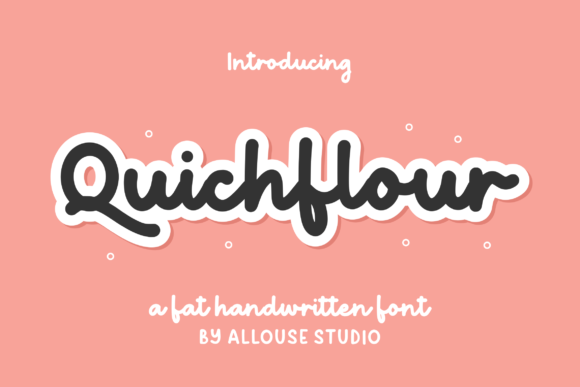
Quichflour: A Practical Guide to Integrating Vintage Charm into Your Design Workflow
Understanding Quichflour’s Place in the Design Process
When you are deep in the planning phase of a creative project, the selection of typography is rarely an afterthought; it is a foundational decision that dictates the tone and hierarchy of the entire composition. Quichflour, a handwritten font created by Allouse Studio, occupies a specific and valuable niche within this decision-making process. It is not merely a set of characters; it is a design asset crafted with a distinct vintage and quirky personality. Understanding where this asset fits requires a clear-eyed assessment of your project's goals. If the objective is to convey corporate austerity or high-tech precision, Quichflour is the wrong tool. However, if the goal is to inject a sense of warmth, approachability, and nostalgic charm, it becomes a primary contender. Its role is to serve as the voice of the design, speaking directly to an audience that values authenticity and a refreshing aesthetic over sterile uniformity.
Strategic Implementation: Before and During the Creative Process
Integrating Quichflour effectively begins long before you open your design software. The preparation phase is critical. This involves gathering inspiration and defining the mood board. Because Quichflour features "cool and quirky" characters, your visual planning should align with these traits. Consider the color palette and imagery you intend to pair with it. Earthy tones, pastels, and textured backgrounds often complement a vintage handwritten style, creating a cohesive visual story. By establishing these parameters early, you ensure that the font does not clash with other elements but rather enhances them.
During the execution phase, workflow efficiency is paramount. Quichflour is particularly well-suited for display purposes—headlines, logos, and call-to-action buttons—where its unique character shapes can breathe and make an impact. A common workflow error is attempting to use a stylized handwritten font for body copy, which sacrifices readability for aesthetics. To maintain quality control, use Quichflour for high-impact, low-word-count elements and pair it with a clean, neutral sans-serif or serif font for longer text blocks. This typographic contrast creates a professional hierarchy that guides the viewer’s eye naturally. For instance, a wedding invitation workflow might utilize Quichflour for the couple's names and the date, while using a simple serif for the venue details and RSVP information. This approach ensures the design feels refreshing and beautiful without becoming visually chaotic or difficult to read.
Compatibility and Technical Integration
A smooth workflow depends heavily on technical compatibility. Quichflour, like any specialized asset, must interact seamlessly with your chosen platforms and tools. Whether you are working in Adobe Illustrator for vector graphics, Canva for quick social media assets, or Procreate for digital illustration, the font must render correctly across different environments. Before committing to a final design, it is wise to test the font's behavior in your specific software stack. Check for kerning issues, particularly between specific letter pairings common in handwritten scripts, such as "Th" or "wh." Allouse Studio has crafted the font to be stylistically cohesive, but manual adjustments are often a necessary part of the implementation process to achieve pixel-perfect results.
Furthermore, consider how Quichflour interacts with other visual assets. If you are using stock photography or custom illustrations, the font should not compete for attention but rather complement the imagery. A practical tip for creators is to create a "type lockup"—a pre-set arrangement of the font with a logo or icon—that can be reused across different project assets. This promotes consistency and saves time, allowing you to focus on the core message rather than reinventing the layout for every new deliverable. This kind of preparation turns a creative asset into a reliable part of your professional toolkit.
Workflow Examples Across Different Industries
The utility of a font like Quichflour extends across various professional workflows, adapting to the specific needs of the user. For a small business owner developing a brand identity, Quichflour can be the cornerstone of a logo that aims to feel personal and handmade. The process involves selecting the font, adjusting the letter spacing to create a custom lockup, and then exporting this as a graphic asset for use on business cards, packaging, and digital storefronts. The goal here is consistency; using the same quirky, vintage typeface across all touchpoints builds brand recognition and conveys a specific set of values to the customer.
For marketers and content creators, the workflow is often faster-paced and centered on engagement. Quichflour excels in social media graphics where the objective is to stop the scroll. A marketer might use it for a quote graphic or a promotional banner on Instagram. The implementation tip here is to ensure the font remains legible on small screens. While the vintage style is charming, it must be tested on mobile devices to ensure the quirky character shapes do not blur into illegibility when viewed at a thumbnail size. This involves a quality control step where the designer previews the asset on a phone before publishing.
Educators and bloggers can also find practical applications. An educator creating a presentation or a digital learning module might use Quichflour for slide titles to make the content feel more approachable and less rigid than a standard corporate template. A blogger designing a media kit or a PDF lead magnet could use the font to establish a personal brand voice that feels distinct from the standard web-safe fonts used in the main article body. In these cases, the font serves as a tool for differentiation, helping the content stand out in a crowded information landscape.
Long-Term Use and Maintaining Aesthetic Integrity
Adopting a specific font into your workflow is a long-term decision. Over time, Quichflour can become a recognizable signature of your work. However, this requires thoughtful organization. Keeping your font library organized, with clear licensing documentation accessible, prevents workflow bottlenecks. When you know exactly where your assets are and how they are licensed, you can move from the ideation stage to the execution stage with greater speed and confidence.
As trends in design evolve, the "vintage" and "handwritten" aesthetic may shift in popularity, but the core appeal of a human touch in design remains constant. Quichflour’s value lies in its ability to convey personality. To use it effectively over the long term, avoid overuse. If every project relies on the same font, the work can begin to feel repetitive. Instead, view Quichflour as one tool in a broader typographic toolkit, to be deployed when the specific need for a cute, refreshing, and quirky voice arises. This strategic restraint ensures that when you do use the font, it has the maximum impact, helping you deliver designs that are not only beautiful but also purposeful and well-integrated into a professional creative process.