Understanding Berliant Ball: A Strategic Guide to Using This Bold Script Font
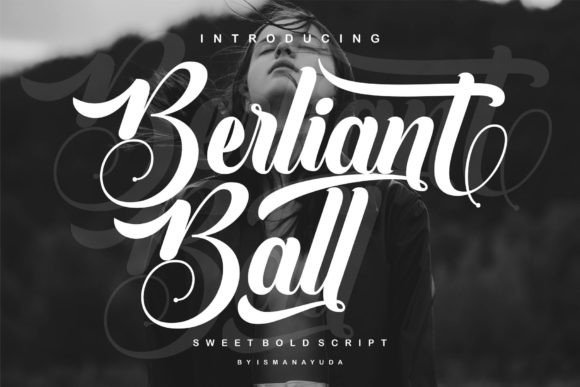
In the world of visual communication, the choice of typeface is a foundational decision that influences perception, engagement, and ultimately, results. Among the myriad options available, Berliant Ball presents a distinctive proposition. It is a bold script font that carries an inherent energy and personality, yet it is tempered by a smooth nuance at the end of its strokes. This unique characteristic offers more than just aesthetic appeal; it provides a strategic tool for creators, marketers, and business owners who understand that typography is a silent ambassador for their brand.
What Exactly is Berliant Ball?
At its core, Berliant Ball is a typeface designed for impact. Its bold weight commands attention, making it suitable for headlines, logos, and display text where immediate recognition is key. The script style injects a human, handcrafted quality, which can foster a sense of authenticity and approachability. However, what sets it apart is the intentional design choice to incorporate a smooth nuance at the terminals and connections of its letters. This detail softens the potential harshness that bold scripts can sometimes possess, resulting in a font that feels both powerful and refined. It is this balance that makes Berliant Ball a nuanced tool rather than a blunt instrument.
The Strategic Value: Why Consider Berliant Ball for Your Projects?
Choosing a font like Berliant Ball is not merely a decorative choice; it is a decision that can support broader objectives. For entrepreneurs and small business owners, this font can be a cornerstone of a visual identity that needs to stand out in a crowded marketplace. Its boldness ensures visibility, while its refined smoothness communicates a level of care and professionalism that generic, overly casual scripts might lack. For marketers and creators, it offers a way to inject personality into campaigns without sacrificing clarity or brand integrity.
From a planning perspective, integrating Berliant Ball requires thought. It is best employed where the goal is to create a memorable impression that balances dynamism with sophistication. Consider its use in contexts where you want to convey excitement—such as for an event launch or a new product—but where you also need to maintain a trustworthy and polished image. The smooth nuance acts as a visual "tone of voice" modulator, ensuring the message feels energetic yet controlled.
Practical Applications and Use Cases
The utility of Berliant Ball extends across various domains. For branding, it can serve as a primary logotype for businesses in creative industries, boutique retail, food and beverage, or personal services like coaching and consulting. A bakery, for example, might use it for its logo to communicate artisanal quality with a warm, inviting feel. A fitness coach could use it to project strength and personal connection.
In marketing materials, Berliant Ball is effective for call-to-action buttons, promotional banners, and social media graphics where a quick, impactful message is needed. Its legibility at larger sizes makes it ideal for these applications. For educators and presenters, it can be used sparingly in slide decks to highlight key terms or quotes, adding visual interest without overwhelming the content.
However, its use demands careful consideration. Berliant Ball is not designed for long-form body text. Its script nature and bold weight would reduce readability in paragraphs, leading to user fatigue and poor comprehension. The strategic approach is to pair it with a clean, neutral sans-serif or serif font for body copy, using Berliant Ball as an accent font to draw the eye to critical elements.
Decision-Making and Implementation Guidance
Before adopting Berliant Ball, conduct a clear assessment of your goals and audience. Ask yourself: Does my brand personality align with a bold yet smooth script? Is my primary need for display typography that conveys both energy and refinement? Who is my target audience, and will this font resonate with them or create a barrier? For a professional services firm targeting corporate clients, it might be too informal. For a youth-oriented lifestyle brand, it could be perfect.
When implementing, adhere to best practices. Limit its use to key touchpoints—logo, main headlines, hero sections. Ensure sufficient contrast with the background color for accessibility. Test it across devices and sizes to confirm its smooth nuances remain effective and don't become visually cluttered on smaller screens. Always prioritize the user's ability to easily understand the message over stylistic flair.
Avoiding Common Pitfalls
The primary risk of using a font like Berliant Ball without clear intent is creating a disjointed brand experience. If it is used randomly—for instance, on every subheading and button—it can dilute its impact and make a design feel chaotic. It can also clash with other design elements if not chosen as part of a cohesive visual system. Overuse can lead to a perception of being overly trendy or lacking in seriousness, which may undermine credibility in certain fields.
Another pitfall is neglecting context. A font that works beautifully on a website header may not translate well to a printed legal document. Consider the medium and the expectations of your audience within that medium. The goal is for Berliant Ball to enhance your message, not distract from it or confuse the viewer.
Long-Term Value and Brand Consistency
When used intentionally, Berliant Ball can contribute to long-term brand recognition. Its unique blend of boldness and smoothness can become a recognizable signature, helping your materials stand out in a sea of generic typography. This consistency, when maintained across all platforms—from your website to your packaging—builds a cohesive brand world that audiences can learn to identify and trust.
Ultimately, the power of Berliant Ball lies in its specificity. It is not a universal solution but a specialized tool. By understanding its strengths—its ability to make a bold statement with a sophisticated finish—and its limitations, you can make an informed decision about where and how to deploy it. In the strategic toolkit of visual communication, knowing when not to use a font is as important as knowing when to use it. Let Berliant Ball be a deliberate choice in your design arsenal, one that is grounded in clear objectives and a deep understanding of the impression you wish to create.