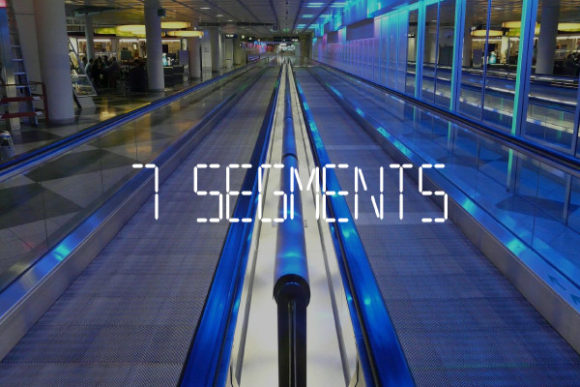
The Enduring Appeal of 7segments: More Than Just a Font
There’s a specific kind of nostalgia that hits when you see those segmented numbers. It’s the glow of a bedside clock radio in a dark room, the countdown on a vintage calculator, or the time display on a microwave from your childhood. That distinct, blocky, instantly readable style isn't just a memory; it's a design language. This is the world of 7segments, a typeface created by Rikyozone that meticulously recreates that classic digital readout. But its application goes far beyond mimicking old tech. It’s a powerful tool for clarity, style, and communication in the modern design landscape.
Where Digital Meets Tangible: Real-World Applications
The true strength of 7segments lies in its versatility. It translates the clean, functional aesthetic of digital displays into projects that exist in the physical and digital worlds. For crafters and makers, this font is a revelation. Imagine designing custom stencils for a garage or workshop, labeling storage bins with a crisp, technical look, or creating vinyl decals for laptops and toolboxes that evoke a hacker or retro-tech vibe. The font’s simple geometry makes it perfect for these applications, ensuring clean cuts with vinyl cutters or laser engravers. It turns a simple label into a statement piece.
Beyond crafting, the font finds a natural home in user interface design and prototyping. When building a mock-up for a smart home app, an industrial control panel, or a fitness tracker interface, using 7segments for numerical data like time, temperature, or stats provides instant recognition. Users intuitively understand it as a display for real-time information. It bridges the gap between a concept and a functional feel, adding a layer of authenticity to a prototype that a standard sans-serif font simply can't provide.
A Font for Every Project: Who Benefits and How
Different audiences will find unique value in the 7segments typeface. For graphic designers, it’s a go-to for projects requiring a retro-futuristic or technical aesthetic. Think poster designs for electronic music events, album art for synthwave bands, or branding for a tech startup that wants to nod to computing history. Its use isn't just decorative; it communicates a specific idea of precision, data, and analog warmth meeting digital form.
For educators and presenters, the font offers a practical advantage. Creating materials for a math class, a physics demonstration, or a data science workshop? Using 7segments for equations, numerical examples, or chart labels can make the information pop. It’s highly legible at a glance, which is crucial in a teaching environment where clarity is paramount. It subconsciously signals that the numbers are important and should be read as data points, not just part of the body text.
Game developers and UI artists also find it indispensable. Whether designing the HUD for a retro-style video game, the interface for a fictional spaceship’s computer, or the timer in a puzzle game, 7segments delivers the perfect aesthetic. It’s pre-loaded with the character of countless sci-fi and arcade classics, saving designers from having to manually create segmented displays from scratch. It’s a shortcut to a genre.
Practical Considerations Before You Dive In
While 7segments is incredibly useful, it’s not a universal solution. Its greatest strength—its distinctive style—is also its primary limitation. It is not a body text font. Using it for paragraphs or long descriptions would be illegible and jarring. Its purpose is specific: numbers, short codes, and crucial data points. Think of it as a highlighter pen, not the ink for the entire page.
Another consideration is context. The font carries strong associations. In the right project, this is a huge benefit. In the wrong one, it might feel out of place or overly thematic. For a legal document, a medical report, or a luxury brand’s primary typography, 7segments would likely undermine the intended tone. The key is to match the font’s inherent personality—technical, retro, functional, and clear—with the message you want to convey.
When incorporating it into your work, pairing is everything. 7segments creates a powerful visual contrast when used alongside a clean, neutral sans-serif font like Helvetica, Arial, or Roboto. This combination allows the segmented numbers to command attention for critical information while the supporting text remains highly readable. It’s a classic hierarchy: the display font for the data, the workhorse font for the explanation.
Strengths and Honest Limitations
The strengths of the 7segments font are clear. It offers instant nostalgia and thematic resonance. It provides superb legibility for numerical data, especially in sizes where other fonts might blur. It’s technically clean, making it ideal for fabrication and digital design. And, as a creation from Rikyozone, it’s a thoughtfully crafted tool that respects the original design principles of seven-segment displays.
On the flip side, its limitations are worth noting. It has a narrow range of use cases. It can feel anachronistic or gimmicky if not applied with intention. Overusing it in a single design can dilute its impact and make the project feel one-note. Furthermore, while it recreates the look of a segmented display, it doesn’t function like one—the segments are fixed as part of the character design, not dynamically generated. This is a font, not a display emulator, which is an important distinction for certain technical projects.
Embracing the Segments
Ultimately, 7segments is about embracing a specific, powerful aesthetic. It’s for the designer who wants to inject a dose of retro-tech charm, the crafter who needs a font that cuts cleanly and looks professional, or the developer who wants to add authentic detail to a digital interface. It solves a specific problem: how to display numbers and data in a way that is instantly recognizable, stylish, and clear. By understanding its personality and applying it in the right context, you can leverage this classic design to elevate your work from ordinary to memorable. It’s a reminder that sometimes, the best way to move forward is to borrow a brilliant idea from the past.