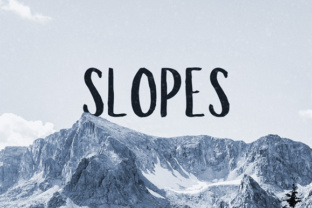
Evaluating Slopes: A Comprehensive Guide to the Handmade Brush Font
In the vast landscape of digital typography, finding a font that genuinely replicates the warmth and imperfection of hand-lettering can be a challenge. Many typefaces attempt the aesthetic but often fall short, looking either too rigid or artificially distorted. This is where Slopes enters the conversation. As a specialized handmade brush font, Slopes is designed to bridge the gap between digital convenience and artisanal charm. However, before integrating any new typeface into a project, a thorough evaluation of its features, versatility, and technical capabilities is necessary to ensure it aligns with your specific creative goals.
Understanding the Aesthetic and Core Functionality
At its core, Slopes is defined by its organic texture and fluid motion. Unlike standard sans-serifs or serifs that rely on geometric precision, this font mimics the pressure and flow of a real brush stroke. This design philosophy makes it particularly suitable for projects that aim to evoke a sense of authenticity, nostalgia, or "vintage" craftsmanship. It is frequently utilized in branding for artisanal goods, coffee shop menus, wedding invitations, and lifestyle blogs where a personal touch is paramount.
The font package includes a robust character set of approximately 400 glyphs. This includes both uppercase and lowercase letters, numerals, and a variety of punctuation marks and symbols. For designers, this breadth is essential. It ensures that you are not limited to simple headlines but can actually compose short paragraphs or complex phrases without running out of stylistic options. The presence of these glyphs allows for a cohesive visual language across different types of content, from a large banner headline to a small footer note.
Technical Capabilities: Multilingual Support and Global Reach
One of the most critical factors in modern font selection is language support. Many display fonts, particularly those in the handwritten category, are limited strictly to English and perhaps a few Western European languages. Slopes distinguishes itself by offering extensive multilingual support. This is a significant advantage for international brands or designers working on localized content.
The font includes support for standard Latin characters, but it extends further to cover Central European, Turkish, and, notably, Russian and Cyrillic scripts. For a designer working on a project that requires bilingual typography—for instance, a product label that needs to appear in both English and Russian—Slopes offers a viable solution without compromising the visual style. This capability prevents the common design error of mixing two completely different typefaces to accommodate different languages, which can often result in a disjointed user experience.
Benefits and Tradeoffs: Is It the Right Fit?
When evaluating Slopes, it is helpful to weigh its strengths against potential limitations. The primary benefit is the "handmade" feel it brings to digital media. In an era of clean, vector-perfect graphics, the rough edges of Slopes can help a design stand out and feel more human. It excels in environments where the goal is to create an emotional connection with the viewer rather than to convey cold, hard data.
However, there are tradeoffs to consider. As with many brush fonts, legibility can be a concern at very small sizes. The intricate details of the brush strokes may become muddy or difficult to read when used for body text in small point sizes. Therefore, Slopes is generally best evaluated as a display or headline font rather than a primary body text font. Furthermore, while the vintage aesthetic is strong, it may not align with corporate environments that require strict, modern minimalism.
Practical Decision-Making: When to Choose Slopes
Determining whether Slopes aligns with your project involves assessing the context of your design. If you are creating assets for a brewery, a bakery, or a rustic wedding, the vintage vibe of Slopes is likely a strong fit. It pairs well with clean, neutral sans-serifs (like Helvetica or Open Sans) for body text, allowing the headline to pop without overwhelming the reader.
Consider using Slopes when you want to emphasize the "handmade" nature of a product. If the marketing copy focuses on "small-batch," "organic," or "crafted with care," the typography should reflect those values. The font’s ability to support Cyrillic and Central European characters also makes it a practical choice for travel blogs or international creative agencies that need a consistent yet expressive typeface across different regions.
Situations Where Alternatives May Be Warranted
Despite its charm, there are scenarios where Slopes might not be the optimal choice. If the project involves heavy data visualization, technical documentation, or long-form reading, the irregular baseline and varying stroke widths of a brush font can cause eye strain. In these cases, a standard serif or sans-serif font is a more responsible choice for accessibility and readability.
Additionally, if the project requires a very modern, futuristic, or highly formal aesthetic, the retro nature of Slopes could clash with the design intent. For example, a fintech app or a high-end luxury law firm might find the handwritten style too casual or unprofessional. In such instances, exploring geometric sans-serifs or elegant modern serifs would yield better results.
Conclusion
Evaluating Slopes requires looking beyond its visual appeal to understand its technical specifications and contextual fit. With its 400-character set, multilingual support including Russian and Turkish, and distinct vintage aesthetic, it is a powerful tool for specific design niches. By considering the tradeoffs regarding legibility and style, you can make an informed decision on whether this handmade brush font serves your project's narrative and functional requirements effectively.