Groovy Knock: Capturing Urban Resilience in Your Visuals
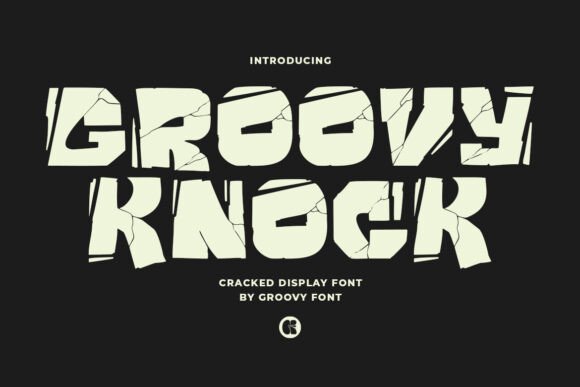
Sometimes, a design calls for more than just clean lines and smooth curves. You need something that feels like it has lived a little, something with a bit of grit and a story to tell. This is where a font like Groovy Knock comes into play. It’s not your typical display typeface; it’s a visual representation of impact and endurance, inspired by the jagged, fractured patterns left on a concrete wall. With its distressed, cracked appearance and bold stance, it offers a raw, rebellious energy that can transform a project from simply neat to genuinely compelling.
Where Does This Font Feel Most at Home?
The true character of a font like this reveals itself in application. It’s a specialist, designed to evoke a specific feeling, and knowing where to deploy it is key. Imagine you’re designing a poster for an underground music festival or a gritty independent film. The jagged edges and distressed texture of Groovy Knock can instantly communicate the raw, unpolished energy of the event, setting the tone before anyone even reads the details. It’s a visual shout, perfect for grabbing attention in a crowded visual landscape.
Beyond entertainment, consider the world of branding for niche products. A craft brewery with a focus on bold, experimental IPAs or a streetwear label built on a foundation of urban culture could use this font to great effect. It lends an immediate sense of authenticity and edge to logos, merchandise tags, and packaging. The font’s inherent texture suggests something handmade, imperfect, and therefore, more genuine. It tells a story of craftsmanship and attitude without needing a single word of explanation.
A Toolkit for the Modern Creator
The applications extend into digital spaces as well. For content creators, especially those in gaming, skateboarding, or urban exploration, using Groovy Knock for video thumbnails, channel banners, or stream overlays can create a powerful and consistent brand identity. Its bold, high-contrast nature ensures legibility even at smaller sizes, a practical consideration for fast-moving digital feeds. It’s a way to visually brand your content as being for an audience that appreciates a little more attitude.
Even in more corporate contexts, a judicious use of such a typeface can be effective. A tech startup focused on disruption or a marketing agency that prides itself on breaking the mold might use it sparingly for a hero headline on their website or in a keynote presentation. It signals innovation and a willingness to challenge the status quo. The key is context; used thoughtfully, it becomes a strategic accent rather than a design distraction.
Practical Considerations Before You Commit
While the visual impact is undeniable, there are a few practicalities to keep in mind. First and foremost is readability. Fonts with heavy distressing and irregular forms, like Groovy Knock, are built for headlines and short, punchy phrases. Trying to use it for a paragraph of body text would be a mistake, as the jagged details that give it character at a large size would become visual noise at a small size, hindering comprehension. It’s a display font, and it excels in that role.
Another consideration is pairing. Because this font has such a strong personality, it needs a companion that can complement it without competing. Pairing it with a clean, simple sans-serif font for subheadings or body copy is often a winning strategy. This creates a visual hierarchy where the edgy font makes the statement, and the cleaner font provides clarity and balance. Think of it as a lead singer and a solid rhythm section—the frontperson gets the attention, but the band makes the song work.
Finally, consider your audience’s expectations. For projects targeting a demographic that values edginess, counter-culture, or rugged individualism, this font is a home run. However, for a project aimed at a luxury spa or a traditional financial institution, it might send the wrong message. Understanding the psychological and cultural connotations of your design choices is crucial. The strength of a tool like this lies in its specificity; using it in the right context amplifies your message, while using it in the wrong one can create dissonance.
Unlocking Its Full Potential
The charm of a typeface like this is its ability to tell a story through form. The "cracked" effect isn't just a visual gimmick; it’s a metaphor for breaking through barriers, for resilience in the face of impact. This narrative quality makes it particularly powerful for campaigns or projects centered on themes of overcoming challenges, urban renewal, or artistic rebellion. It can add a layer of depth and meaning to your typography that a standard, clean font simply cannot provide.
From a technical standpoint, when working with a textured display font, it’s wise to consider the background. Placing it on a simple, solid color or a subtle, non-distracting texture will allow its details to shine. A busy background can clash with the font’s inherent complexity, making the entire composition feel chaotic and hard to read. Let the font be the focal point of your typographic element, and build your design around supporting it.
Ultimately, incorporating a font like this is about adding a specific tool to your creative arsenal. It’s not for every project, but when the brief calls for something bold, textured, and full of character, having it at your disposal can make all the difference. It encourages you to think about typography not just as a means of communication, but as a vital component of mood and storytelling. By understanding its strengths and ideal contexts, you can harness its unique energy to create designs that don’t just get seen, but felt.