Understanding Forever Creative: A Balanced Look at a Minimalist Sans Serif Font
In the world of typography, choosing the right font is a foundational decision that influences tone, readability, and brand perception. For designers, entrepreneurs, and creatives, the search often leads to comparing options that balance aesthetic appeal with practical function. Forever Creative enters this landscape as a minimalist sans serif font, positioning itself as a versatile tool for various visual projects. This article offers a practical evaluation of its characteristics, potential applications, and how it might fit into your workflow compared to other typographic approaches.
What Defines the Forever Creative Font?
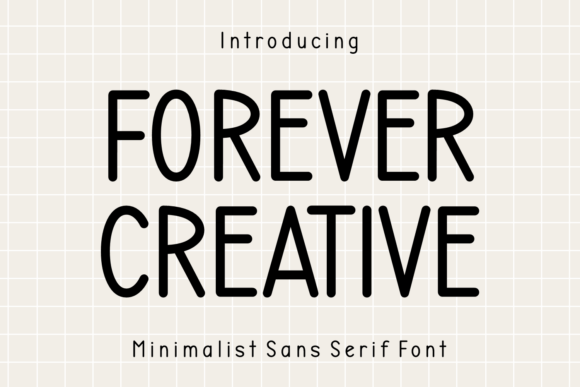
At its core, Forever Creative is a sans serif typeface. This means it lacks the small projecting features, or "serifs," at the end of strokes that characterize fonts like Times New Roman. Its design philosophy leans heavily into minimalism, featuring clean lines, balanced proportions, and an uncluttered structure. The font family is noted for its elegant and contemporary spirit, aiming to provide sophistication without visual complexity.
A key characteristic is its multilingual support and an extensive set of glyphs. This makes it a practical consideration for projects targeting international audiences or requiring special characters. The design is described as "bespoke and adaptive," suggesting it was crafted with attention to detail across a wide range of weights and styles, which is crucial for creating visual hierarchy in designs.
Practical Applications and Best-Fit Scenarios
Evaluating a font means looking beyond its aesthetic to where it performs best. The utility of Forever Creative appears to span both digital and physical mediums, a versatility that is a significant factor in decision-making.
- Digital and Editorial Design: Its clean lines make it a candidate for website headlines, user interface elements, and digital publications where clarity is paramount. The contemporary feel aligns well with modern web design trends that favor readability on screens.
- Product Packaging and Labels: For packaging that requires a minimalist, upscale look—such as cosmetics, artisanal goods, or tech products—this font could convey a sense of quality and modernity. Its legibility at various sizes is a practical benefit here.
- Apparel and Merchandise: The font is highlighted for use on t-shirts, tote bags, and mugs. In this context, it would serve as a neutral yet stylish backdrop for quotes or branding, competing in the same space as other popular minimalist sans serifs used for merchandise.
- Social Media Graphics: For creating punchy headlines or quotes on platforms like Instagram or Pinterest, a font that remains clear and impactful at thumbnail sizes is essential. Forever Creative's structure is designed for such attention-demanding tasks.
Comparing Forever Creative to Other Typographic Choices
No font exists in a vacuum. When considering Forever Creative, it's helpful to mentally compare it to broader categories and styles to understand its relative strengths.
Compared to Other Minimalist Sans Serifs: The market has many minimalist sans serifs, from geometric to humanist styles. Forever Creative likely differentiates itself through its specific glyph design, weight variations, and the balance it strikes between being "elegant" and "avant-garde." Some minimalist fonts prioritize extreme neutrality, while others, like this one, may inject a subtle personality through stroke endings or letter spacing.
Tradeoffs to Consider:
- Personality vs. Neutrality: A font with a distinct "contemporary spirit" might not be the best choice for projects requiring absolute neutrality, such as legal documents or highly technical manuals. Its strength in evoking a mood could be a limitation in contexts where the message must stand alone without typographic influence.
- Display vs. Body Text: Descriptions emphasize its use for headlines and labels, which are display functions. While it may be legible, its suitability for long-form body text (like a book or lengthy report) would need careful testing, as readability over paragraphs depends on factors like x-height and letter spacing that are optimized for display use.
- Licensing and Ecosystem: A practical decision factor involves understanding the font's licensing (for commercial use, number of users, etc.) and whether it comes in variable font formats or has a broad enough weight range (e.g., thin, regular, bold, black) for your project's needs.
Is Forever Creative the Right Choice for Your Project?
Making an informed decision involves aligning a font's attributes with your specific requirements. Here’s a practical framework for evaluation:
- Define the Project's Tone: If your goal is to achieve a modern, sophisticated, and clean aesthetic, Forever Creative is designed to fulfill that brief. If you need a traditional, rustic, or highly ornate feel, other categories of fonts would be more appropriate.
- Assess the Application Medium: Consider where the text will primarily live. As noted, its design is optimized for both print and digital, but always test in your specific environment—view a mockup on a product sample or a device screen.
- Test with Real Content: Fonts can look different with actual words. Pair Forever Creative with your actual headlines, quotes, or body copy. Check the spacing, the look of common letter combinations, and overall readability in context.
- Consider Your Audience: The multilingual support is a major strength for global projects. Ensure the character set includes all the languages and symbols you need.
- Evaluate the Competition: Research other fonts in the minimalist sans serif category. Look at how they handle similar use cases. The best choice often comes down to subtle differences in character width, weight options, and the overall "feel" that resonates with your brand or project's identity.
In conclusion, Forever Creative presents itself as a well-crafted, versatile sans serif font tailored for modern design challenges where minimalism and elegance are desired. Its value lies in its balance of aesthetic appeal and functional breadth, from digital interfaces to physical products. However, like any design tool, its effectiveness is context-dependent. By methodically comparing its features against your project's specific tone, medium, and audience needs—and by testing it with your own content—you can determine if it is the quintessential choice to help you be, as its name suggests, forever creative.