Mastering Your Visual Strategy with the Easter Planner Font
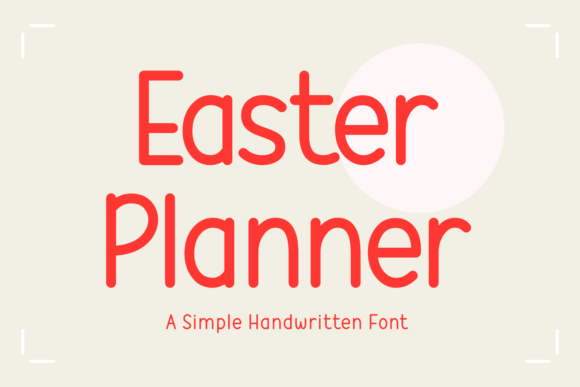
In the bustling world of digital design and seasonal marketing, typography often serves as the silent ambassador of your brand’s personality. When a holiday like Easter approaches, the pressure to create visuals that feel fresh, energetic, and celebratory is immense. This is where Easter Planner enters the conversation. At its core, it is a fresh, handwritten typeface designed to embody vibrancy and variety. It captures that elusive casual energy that makes a design feel approachable rather than corporate. Perfectly suited for social media posts, product designs, T-shirt graphics, and even for a distinguished touch on mugs, this font offers a modern yet accessible styling option. However, merely downloading a script font is not enough to guarantee a successful design. To truly leverage the Easter Planner font and avoid common design pitfalls, you need a strategic approach that balances creativity with functionality.
The Allure of the Handwritten Style
Why are so many creators, entrepreneurs, and hobbyists drawn to fonts like Easter Planner? The answer lies in the psychology of connection. In an era dominated by sterile, geometric sans-serifs and rigid corporate branding, a handwritten font signals authenticity. It suggests that a human being, rather than a machine, is behind the message. For small business owners creating flyers for an egg hunt or educators preparing classroom materials, Easter Planner provides that "distinguished touch" without feeling stuffy. It bridges the gap between professional polish and personal warmth, making it ideal for school projects, church bulletins, and direct-to-consumer product lines.
However, the charm of casual energy can quickly turn into chaos if not managed correctly. Many beginners fall into the trap of thinking that a decorative font like Easter Planner should be used for every single word on the page. This is the first and perhaps most critical mistake to address. When you use a script or handwritten font for large blocks of text, you sacrifice readability for style. The goal of typography is communication; if your audience has to squint to read your message, the design has failed, no matter how beautiful the letters are individually.
Avoiding the "Wall of Text" Trap
A common misunderstanding regarding display fonts is their versatility. While Easter Planner is vibrant and legible for short bursts of text—such as headlines, sub-headers, or call-to-action buttons—it is not designed for body copy. Imagine receiving a lengthy email written entirely in a loose, handwritten script. It would be exhausting to read. The same applies to your designs.
The Correction: Adopt a hierarchical approach to your typography. Use Easter Planner to draw the eye to the most important elements: the "Happy Easter" greeting, the date of the event, or the discount percentage. For the supporting details—such as terms and conditions, addresses, or ingredient lists—switch to a clean, high-contrast sans-serif or serif font. This contrast not only improves readability but also makes the handwritten font pop even more by giving it space to breathe.
Practical Application: Pairing and Spacing
When pairing Easter Planner with other typefaces, look for a partner that offers stability. Because Easter Planner has a casual, flowing rhythm, it pairs best with a sturdy, geometric sans-serif. This creates a visual anchor for the design.
- For Social Media Graphics: Use Easter Planner for the main hook. Keep the background uncluttered. If the background image is busy, place a semi-transparent shape behind the text to ensure the font remains the focal point.
- For Product Designs (Mugs/T-Shirts): Consider the curvature of the surface. Handwritten fonts can sometimes look distorted on curved surfaces if the letters are too close together. Always increase the "tracking" or letter spacing slightly when applying Easter Planner to merchandise to maintain legibility.
- For School Projects: While it adds a fun touch, ensure that if the project is graded for content, the body text remains standard. Use the font for titles and section headers to inject personality without compromising academic readability.
The Technical Oversight: Ligatures and Kerning
One of the most overlooked details when working with high-quality script fonts like Easter Planner is the utilization of OpenType features, specifically ligatures and stylistic alternates. Many users install the font and simply type away, unaware that the font likely contains special character combinations that make the script look more authentic.
Without these features enabled, you might notice awkward collisions between letters—for example, where the tail of a "g" crashes into the stem of an "h." This can make the text look amateurish, as if it were a digital approximation of handwriting rather than a fluid design.
The Better Approach: Before finalizing your design in software like Adobe Illustrator, Photoshop, or Canva, check your character panel. Look for "Stylistic Sets" or "Contextual Alternates." Enabling these allows Easter Planner to swap out standard letterforms for variations that connect more naturally with their neighbors. This small technical step elevates the design from a basic "font change" to a professional typographic composition.
Evaluating Usability and File Formats
For freelancers and marketers, time is money. A frequent frustration occurs when a font looks great in a preview but behaves poorly in the actual design software. When you decide to dive into this font feast and acquire Easter Planner, you must verify the file formats included.
While TTF (TrueType Font) is standard, OTF (OpenType Font) files usually contain the advanced features mentioned above. If you are working on web projects, you may also need a WOFF or WOFF2 file. Furthermore, check the licensing. If you are a small business owner planning to sell T-shirts featuring the Easter Planner font, you generally need a commercial license, not just a personal use license. Overlooking this detail can lead to legal headaches later. Always read the "Read Me" file included with your download.
Color and Texture Considerations
Because Easter Planner is designed to be vibrant, it responds exceptionally well to color. However, avoid placing thin, pastel-colored text over a high-contrast, dark background without testing it first. Handwritten fonts often have thinner stroke weights than blocky sans-serifs. If the text size is too small, it can disappear on mobile screens.
Conversely, when using the font for T-shirt graphics, consider the fabric texture. A very intricate handwritten font can get lost in the weave of a heavy canvas or a textured knit. In these instances, bolding the font (if the typeface includes a bold weight) or adding a subtle outline or shadow can help the design stand out against the physical material.
Modern Styling for Diverse Projects
The versatility of Easter Planner lies in its ability to adapt to different moods. By changing the color palette and the accompanying graphics, you can steer the font's personality in different directions:
- Rustic Farmhouse: Pair Easter Planner with earthy tones, linen textures, and serif fonts to create a cozy, farmhouse aesthetic perfect for home decor or boutique branding.
- Modern Minimalist: Use a stark black-and-white palette. Let the font stand alone against plenty of white space. This works well for high-end chocolate packaging or boutique clothing tags.
- Playful Pop: Combine the font with bright neons and geometric shapes. This is ideal for children’s party invitations or school event posters.
By consciously deciding on the aesthetic direction before you start typing, you ensure that the font serves the message rather than overwhelming it. Easter Planner is a tool, and like any tool, its effectiveness depends on the skill and intention of the user.
Finalizing Your Design Workflow
As you integrate Easter Planner into your workflow, remember that the best designs are often the result of restraint. It is tempting to use every stylistic alternate and every color of the rainbow, but the goal is effective communication. Whether you are a blogger sprucing up a seasonal post, an educator creating engaging materials, or an entrepreneur launching a holiday product line, the font provides the vibrancy. Your job is to provide the structure.
Take the time to proofread your text, check your spacing, and ensure your color contrast meets accessibility standards. By avoiding the common mistakes of overuse, poor pairing, and technical neglect, you can transform a simple download into a powerful asset for your brand. Easter Planner is more than just a collection of letters; it is a gateway to designs that feel personal, energetic, and unmistakably ready for the season.