Bad Gong: The Creative Script That Adds Instant Personality
Finding a script font that feels genuinely handcrafted without sacrificing legibility is a common challenge. Too often, we encounter typefaces that are either overly flourished and impossible to read, or so stiff they might as well be digital prints. Bad Gong, a creative and brushed script font designed by Peter Wiegel, strikes a rare balance. It brings the organic, tactile feel of hand-lettering into a digital format that works seamlessly across modern design projects. If you are looking to inject energy and authenticity into your work, this typeface deserves a closer look.
Understanding the Visual Character of Bad Gong
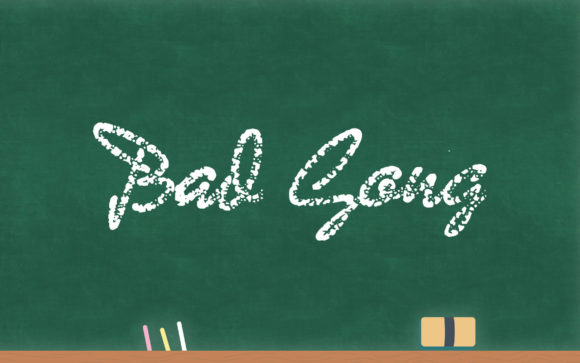
At first glance, Bad Gong presents itself with a confident, flowing rhythm. It is not a timid font. The characters are crafted with a distinct brushed texture that mimics the resistance and ink flow of a real marker or brush pen. This gives the typeface a dynamic, slightly rough edge that feels incredibly human. Unlike formal calligraphy scripts that demand rigid adherence to tradition, Bad Gong embraces a more casual, expressive aesthetic.
The "well-balanced" nature of the font is one of its strongest technical assets. When designers talk about balance in typography, they refer to how the weight of the letters interacts with the negative space around them. Bad Gong manages to maintain a consistent baseline and x-height despite its free-flowing style. This consistency is crucial. It ensures that when you use Bad Gong for a headline or a logo, the text doesn't look chaotic or unintentional. Instead, it looks curated. The letters connect in a way that feels natural, avoiding the awkward collisions or gaps that plague lesser script fonts.
The personality of Bad Gong is undeniably energetic. It has a forward-moving momentum that suggests creativity, movement, and action. This makes it a fantastic choice for projects that need to convey excitement or a personal touch. It bridges the gap between a traditional handwritten font and a polished display font, offering versatility that is hard to find in the realm of premium font collections.
Where Bad Gong Shines: Practical Applications
The true test of any typeface is how it performs in the real world. A font can look beautiful in a specimen sheet but fail miserably on a product label or a website header. Bad Gong, however, is designed to adapt. Its unique character allows it to serve as a powerful tool in various creative contexts, from brand identity to packaging design.
Branding and Logo Design
For entrepreneurs and small business owners, a logo is the face of the brand. If your business prides itself on being artisanal, creative, or approachable, Bad Gong is an excellent candidate for your logo design. Imagine a coffee roaster, a boutique clothing line, or a handmade cosmetics brand. Using Bad Gong instantly communicates that there is a human behind the business. It suggests that care and craftsmanship go into the product. Because the characters are well-balanced, the logo remains recognizable even at smaller sizes, which is vital for business cards and social media profile pictures.
Marketing and Social Media
In the fast-paced world of digital marketing, grabbing attention is half the battle. Generic sans serif font choices often blend into the background noise of a newsfeed. Bad Gong acts as a visual disruptor. It is perfect for social media graphics, particularly for quotes, call-to-action overlays, or sale announcements. The brushed texture pops against clean backgrounds, creating a focal point that draws the eye. For marketers, using a creative font like Bad Gong can significantly increase engagement rates because it feels less like corporate advertising and more like a friendly recommendation.
Editorial and Publishing
Publishers and bloggers often struggle with visual hierarchy. You need a way to distinguish your main headlines from your sub-headers and body text. Bad Gong works exceptionally well as a headline font for editorial design. If you are writing a lifestyle blog, a travel journal, or a food magazine, pairing Bad Gong with a clean, legible serif font or sans serif font for the body copy creates a stunning contrast. The script font adds personality and flair to the title, while the body text ensures the content remains easy to read.
Packaging and Physical Products
Physical products require fonts that look good on textured surfaces. Because Bad Gong has a "brushed" quality, it holds up surprisingly well on packaging materials like kraft paper, cardboard, or matte finishes. It avoids the "flat" look that digital-only fonts sometimes have when printed. Whether you are designing a label for a jam jar or a tag for a gift bag, this typeface adds a layer of tactile realism to the design assets.
Integrating Bad Gong into Your Workflow
Adopting a new typeface into your design toolkit requires more than just installation; it requires strategy. To get the most out of Bad Gong, you need to consider how it interacts with other elements of your design, specifically regarding font pairing and readability.
The Art of Font Pairing
Bad Gong is expressive. Therefore, it demands a partner that is stable and unobtrusive. If you pair Bad Gong with another decorative font, the result will likely be visual noise that confuses the viewer. The best approach is to use contrast.
- Pair with Sans Serifs: A geometric sans serif font (like Montserrat or Lato) provides a clean, modern counterpoint to the organic nature of Bad Gong. This combination works well for tech startups that want to appear friendly or for modern web design projects.
- Pair with Serifs: A classic serif font (like Garamond or Playfair Display) can elevate Bad Gong, making the combination feel more sophisticated and suitable for luxury branding or high-end editorial design.
- Pair with Monospace: For a trendy, contemporary vibe, try pairing Bad Gong with a monospace font. This works well for creative portfolios or music event posters.
When testing your pairings, pay attention to the weight. Bad Gong has a medium-to-bold weight naturally. If your secondary font is too thin, it might get visually overpowered. You may need to bump up the weight of your body text to create an equilibrium.
Readability and Hierarchy
While Bad Gong is more legible than many script fonts, it is still a display typeface. It is meant to be seen, not necessarily read in long paragraphs. Use it for impact. Use it for the first three words of a headline. Use it for a single call to action. Avoid using Bad Gong for body copy or legal disclaimers. Doing so will frustrate your audience and dilute the font's impact.
Consider the tracking (letter spacing). Because script fonts connect, tightening the tracking too much can cause letters to overlap illegibly. In most cases, leaving the tracking at the default setting or slightly loosening it allows the "brushed" texture of the letters to breathe, enhancing the modern typography feel.
Licensing and Usage
For designers working with clients, understanding the licensing of a commercial font is non-negotiable. Peter Wiegel has made Bad Gong available, but you must verify the specific license for your intended use. If you are using it for a client's logo, ensure the license covers commercial reproduction. If you are using it for a massive global ad campaign, check if an extended license is required. Treating font licensing seriously is a mark of a professional designer and protects both you and your client from legal issues down the road.
Why "Brushed" Works in a Digital Age
We live in an era dominated by screens, pixels, and vectors. Everything is crisp and perfect. While there is nothing wrong with precision, it can sometimes feel sterile. This is why handwritten fonts and brushed scripts are seeing a resurgence. They provide a necessary antidote to digital perfection.
Bad Gong taps into this psychological need for authenticity. When a customer sees a brushed script on a website or a flyer, they subconsciously register it as "human." It breaks down the barrier between the brand and the consumer. It says, "We are not just an algorithm; we are people." This emotional connection is invaluable for brand identity.
Final Thoughts on Adding Bad Gong to Your Collection
Every designer, blogger, and entrepreneur needs a "wild card" in their font library—a typeface that can instantly change the mood of a design. Bad Gong is that wild card. It is versatile enough to be used in packaging design, yet bold enough to anchor a logo design. It brings a unique, well-balanced aesthetic that refuses to be ignored.
If you have been relying on the same standard sans serif and serif combinations for years, introducing Bad Gong might be the spark your creative ideas need. It challenges you to think differently about layout, hierarchy, and tone. Add it to your toolkit, experiment with its rhythm, and watch how it transforms your static designs into something that feels truly alive.